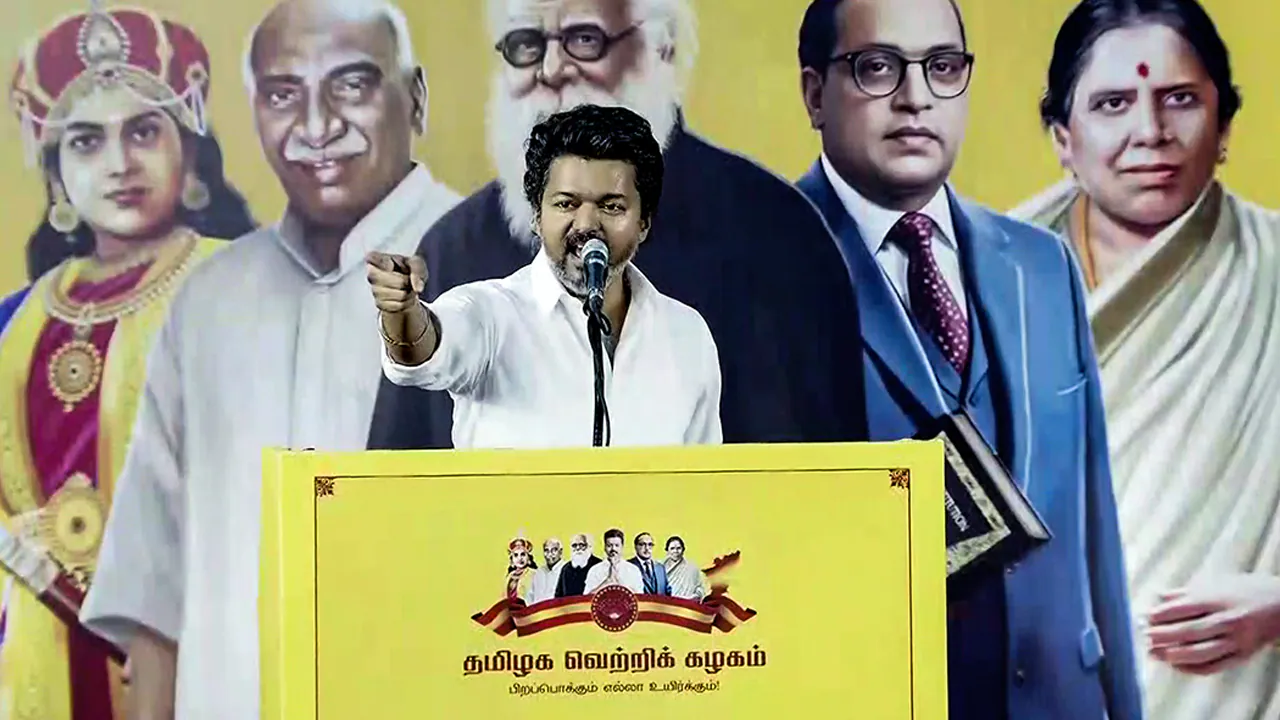
When a superstar walks into politics, people usually expect big rallies and fiery speeches. Here, something different is happening. Actor Vijay is stepping into public life through his new party, TVK, by talking about a very basic but very serious problem: stormwater and flooding.

In many parts of Tamil Nadu, heavy rain means blocked drains, water up to the knees, power cuts, and kids missing school. For some families, it also means damaged furniture, lost shop stock, and rising hospital bills. That is why it matters that vijay holds 1st public outreach on stormwater instead of a grand show about ideology.
This move signals a choice to start with drains, not drama. For TVK supporters and curious voters, it raises a simple but strong question: can a focus on daily civic trouble change how politics works in the state?
Why Vijay Chose Stormwater For His First Public Outreach
Stormwater, flooding, and daily life in Tamil Nadu
Stormwater is just rainwater that flows over streets, roofs, and open land. When the system works, this water moves through drains and channels into lakes, rivers, or the sea. When the system fails, whole neighborhoods turn into dirty pools.
People in Tamil Nadu know this story well. During intense monsoon spells, even a short burst of rain can fill low-lying streets. Drains choked with plastic, silt, and construction waste push water back onto the road. Potholes open up, buses crawl, and traffic jams stretch for hours.

For a daily wage worker, that can mean losing a full day of income. For parents, it can mean children wading through dirty water to reach school, or staying home because classrooms are flooded.
There is also the hidden problem of sewage mixing with stormwater. When manholes overflow, the water that enters homes and shops is not just rain. It carries bacteria and waste, which raises the risk of fever, stomach infections, and mosquito breeding.
So, stormwater is not only about infrastructure. It is about health, work, travel, and safety. It touches almost every voter in some way, which makes it a powerful first topic for a new political leader who says he wants to fix everyday problems.
How this issue fits Vijay’s public and political image
On screen, Vijay often plays the role of a protector, someone who stands between ordinary people and neglect or corruption. Many of his fans see him as a voice for those who do not usually get heard.
By picking stormwater for his first outreach, he brings that same image into real life. Instead of starting with abstract debates, TVK is trying to look like a party that listens to small but urgent civic issues: drainage, roads, streetlights, and waterlogging.
This focus carries a quiet political message. Clean drains, working pumps, and clear channels are basic signs of good governance. When they fail, people quickly see where the system is weak. Talking about stormwater gives Vijay a way to speak about accountability and planning, without pointing fingers at any single party by name.
It also lets him show a practical side. Voters can check if drains are cleaned, if maps of flood zones are made public, and if work happens before the next rainy season. That makes promises easier to measure, which can either build trust or expose empty talk.
Inside the Event Where Vijay Holds 1st Public Outreach On Stormwater
Who attended and what citizens shared about flooding
At the first outreach on stormwater, the crowd was not just fans with banners. Reports and visuals showed a mix of people: residents from low-lying streets, small shop owners, college students, auto drivers, women from flood-hit colonies, and local civic activists.
Many came with stories they have repeated at ward offices for years. For example, a shopkeeper near a busy main road might describe how even moderate rain sends dirty water into his store, spoiling goods and chasing away customers. He pays rent all year, but during monsoon days he cannot even open his shutter.
A mother from an inner lane might speak about her children missing school for three or four days in a row whenever there is a strong spell of rain. The street turns into a stream, and she fears both snakes and open manholes hiding under the water.
Youth volunteers might talk about helping older residents move furniture to higher shelves, or pushing stalled bikes through waist-deep water. Their tone often shifts between frustration and hope, because this time someone with a wide platform is in the room, listening.
People did not come only to complain. Many suggested simple ideas too: regular drain cleaning before monsoon, proper covers for stormwater channels, and stricter checks on building approvals in flood zones. The outreach gave them a space to say, “We know the problems, and we see some of the solutions, please act on them.”
Key promises and ideas Vijay and TVK put forward
From TVK’s side, the outreach focused on turning these stories into clear action points. Vijay spoke about treating stormwater as a year-round issue, not just a crisis headline during cyclones.
Some of the key ideas highlighted at the meeting included:
- Mapping low-lying and flood-prone areas so that drains, canals, and pump sets are upgraded first where they are needed most.
- Regular desilting and cleaning of drains before each rainy season, with public schedules so residents can track work in their ward.
- Better coordination between local bodies, like corporations, municipalities, and panchayats, to avoid gaps where one agency blames another during floods.
- Citizen monitoring tools, such as simple reporting apps, WhatsApp helplines, or ward-level committees, so people can send photos, mark blocked drains, and follow up on complaints.
- Stronger disaster response, including safe shelters, early warnings, and clear routes for ambulances when certain streets flood.
Vijay framed stormwater as a shared responsibility. He pointed out that government must plan and maintain systems, while citizens must avoid dumping garbage in drains and support local monitoring. That framing allowed TVK to speak of partnership instead of only blame.
Media, social media, and political reaction to the outreach
Traditional news channels picked up the event quickly. Prime time debates asked why a star had chosen stormwater as his first major topic, instead of a grand promise or a direct attack on rivals. Clips of citizens describing their flooded streets ran on local TV and online portals.
On social media, supporters praised the focus on real-life issues. Many posts said it felt refreshing to hear detailed talk about drains, pumps, and flood maps instead of slogans. Hashtags linked Vijay, TVK, and stormwater, and photos from the outreach spread on fan pages.
At the same time, critics questioned timing and intent. Some asked if the outreach was only a pre-election show, and whether a newcomer to politics could handle technical tasks like urban flood planning. Others said that solving stormwater needs strong coordination with existing systems, not just public meetings.
Still, the net effect was clear. For at least a few days, stormwater management became a headline topic, not just a seasonal complaint. That shift in public conversation matters in a state where intense rain events are becoming more common.
What Vijay’s Stormwater Outreach Means For TVK And Voters
Can focused outreach on civic issues build long term trust?
If TVK keeps returning to concrete civic issues, it can shape a distinct identity. Many voters, especially younger ones, are tired of only hearing big promises that never touch their street or bus stop. They look for leaders who show up, listen, and report back.
Regular outreach on topics like stormwater, garbage collection, and drinking water can become a pattern. Meetings can set clear targets, and follow-up sessions can show what changed. That kind of loop, from complaint to action to review, builds trust over time.
For Vijay, this first event is a test. If his words translate into visible work through local representatives and officials, his image as a problem solver will grow. If not, people will treat the outreach as just another stage performance.
What citizens should watch for after this first stormwater event
For voters, the real work starts after the cameras leave. Here are a few simple things to track in the coming months:
- Are there public updates on which drains and canals are cleaned, and when?
- Do local bodies share maps of flood-prone areas and planned upgrades?
- During the next rainy season, do the same streets flood again, or is there at least some improvement?
- Is TVK’s team still reachable for complaints, photos, and follow-up, or was access only for the first event?
Citizens can also join ward meetings, talk to engineers, and keep sharing data from their streets. When more people ask sharper questions, all parties, not just TVK, feel pressure to treat stormwater as a long term priority, not a seasonal slogan.
Conclusion
In many ways, vijay holds 1st public outreach on stormwater is more than a single meeting. It is a symbolic test of how film fame, new politics, and daily civic pain points can meet in one place.
The true scorecard will not be the size of the crowd or the number of retweets. It will be cleaner drains, safer streets, shorter waterlogging, and fewer homes ruined by dirty floodwater. If even a part of that change appears on the ground, this first outreach will look like a smart starting point.
For that to happen, citizens have to stay active. Ask questions, send complaints, track local work, and expect clear replies from every leader, including Vijay and TVK. When people keep watch, stormwater becomes not just a problem of rain, but a measure of how seriously those in power treat public life.